Slope engineering in Overland Park encompasses the comprehensive assessment, design, and stabilization of natural and man-made inclines to ensure long-term safety and structural integrity. This category addresses critical geotechnical challenges that arise from the region's variable topography, where slopes are integral to residential developments, commercial infrastructure, and public works. A thorough understanding of slope behavior is essential to prevent landslides, erosion, and settlement issues that can compromise property and public safety.
In Overland Park, the significance of slope management is amplified by the local geological conditions, which include residual soils, weathered shale, and limestone formations typical of northeastern Kansas. These materials exhibit variable strength and drainage characteristics, making them susceptible to instability when subjected to heavy rainfall or construction loads. A precise slope stability analysis is therefore indispensable for evaluating factors of safety and predicting potential failure modes in these complex subsurface environments.
Projects requiring slope expertise in the area must adhere to national and local standards, including the International Building Code (IBC) as adopted by the City of Overland Park, which references geotechnical design criteria from the American Society of Civil Engineers (ASCE 7). Additionally, the Kansas City Metropolitan Chapter of the International Code Council provides regional amendments that address soil bearing capacity and foundation requirements. For deep excavations or steep cuts, designing active and passive anchor systems often becomes a necessity to meet these stringent safety mandates while allowing for efficient land use.
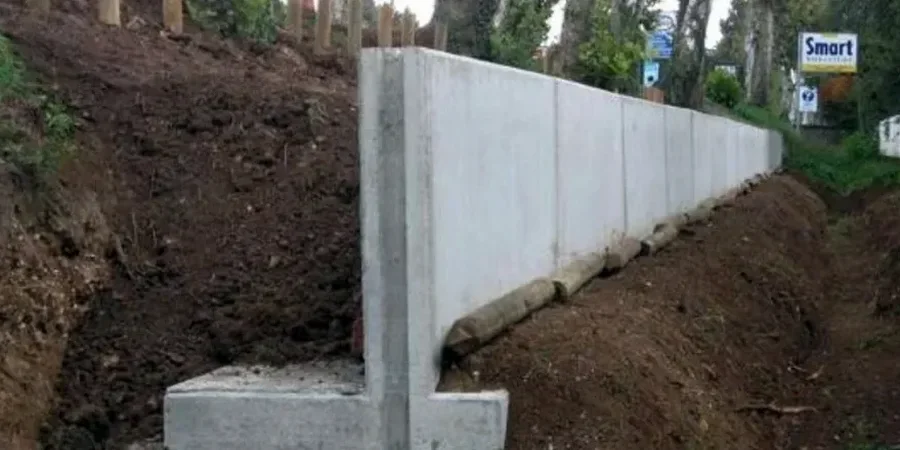
The scope of this category extends to a variety of project types, from stabilizing highway embankments along major corridors like US-69 to enabling the construction of hillside homes and commercial retaining structures. When grade changes exceed natural limits, a robust retaining wall design is frequently integrated into the slope solution, combining structural engineering with drainage management. Whether for temporary shoring during construction or permanent erosion control, a holistic geotechnical approach ensures that slopes remain stable, functional, and compliant with all regulatory requirements.
Common questions
What are the main factors that cause slope instability in Overland Park?
Primary triggers include prolonged rainfall saturating the clay-rich residual soils, which reduces shear strength, along with inadequate drainage, over-steepened excavations, and seasonal freeze-thaw cycles. Local weathered shale layers can also act as slip planes when water infiltrates, necessitating thorough subsurface investigation to identify these hazards before design.
When is a professional slope stability analysis required for a project?
An analysis is typically mandated for any site with inclines steeper than 3:1 (horizontal:vertical), for cuts or fills exceeding 5 feet in height, or when structures are located near the crest or toe of a slope. City permitting processes often require a geotechnical report demonstrating a minimum factor of safety, especially in areas with mapped landslide potential.
What regulations govern slope design and construction in Overland Park?
Slope work must comply with the City of Overland Park's adopted building codes, which are based on the IBC and local amendments. These regulations set standards for soil investigation, allowable bearing pressures, and setback distances from slope crests. The design must also meet stormwater management requirements to control runoff and prevent erosion.
How do retaining walls integrate with overall slope stabilization strategies?
Retaining walls offer lateral support to resist soil pressure and can be keyed into stable strata to anchor a slope. They work in conjunction with drainage systems, such as weep holes and gravel backfill, to relieve hydrostatic pressure. A properly designed wall transforms a precariously steep grade into a terraced, stable configuration, protecting both the slope face and adjacent properties.
Location and service area
We serve projects across Overland Park and surrounding areas.