Road geotechnics in Overland Park forms the critical foundation upon which all successful transportation infrastructure is built. This specialized discipline bridges the gap between raw earth materials and engineered pavement systems, addressing the unique challenges posed by local soil conditions, drainage patterns, and loading demands. For commercial developers, municipal planners, and transportation agencies, a comprehensive geotechnical approach ensures that roadways withstand decades of traffic while minimizing costly maintenance and premature failures. The integration of proper subgrade evaluation, material selection, and structural design defines the longevity of every linear foot of pavement across Johnson County.
The geological context of Overland Park presents a varied subsurface profile that demands careful investigation. Much of the region is underlain by residual silts and lean clays derived from the weathering of Pennsylvanian-age limestone and shale bedrock. These fine-grained soils often exhibit moderate to high plasticity, making them susceptible to volumetric changes with seasonal moisture fluctuations. In lower-lying areas near streams and tributaries, alluvial deposits introduce layers of soft, compressible clays that require special consideration for settlement and stability. The presence of expansive clay minerals in certain formations can lead to differential heave, a primary culprit behind pavement cracking and roughness if not properly mitigated during design.
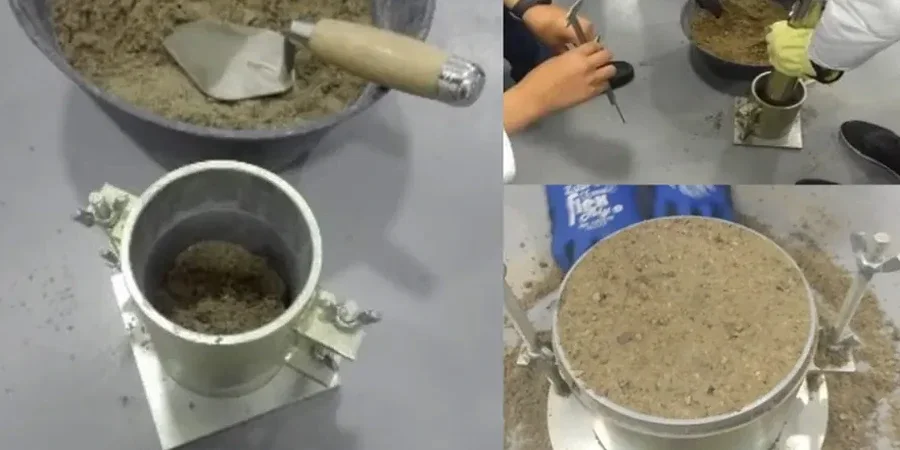
Design and construction in Overland Park must conform to standards established by the Kansas Department of Transportation (KDOT) as well as local municipal specifications. KDOT's Standard Specifications for State Road and Bridge Construction offer granular requirements for subgrade preparation, compaction, and testing protocols. The city supplements these with its own technical provisions for subdivision streets and arterial roadways, often referencing AASHTO guidelines for sampling frequency and acceptance criteria. A fundamental component of any road geotechnical program is the CBR study for road design, which quantifies the load-bearing capacity of the subgrade and directly influences the required pavement thickness. These standards ensure that every project, from a residential cul-de-sac to a major arterial, meets minimum performance benchmarks.
The application of road geotechnics spans a diverse array of project types throughout Overland Park. Greenfield residential developments require extensive subgrade characterization and earthwork specifications to establish stable building pads and street networks. Commercial and industrial sites, with their heavier truck traffic and concentrated loading, demand robust pavement structures often validated through detailed mechanistic-empirical analysis. For high-traffic corridors and intersections, rigid pavement design using Portland cement concrete offers durability and reduced long-term maintenance, while the majority of collector streets and local roads benefit from optimized flexible pavement design with hot-mix asphalt. Bridge approaches, retaining walls, and stormwater conveyance systems integrated with roadways all fall within this interconnected geotechnical framework, where soil-structure interaction governs performance and safety.
Common questions
What is the primary purpose of a road geotechnical investigation in Overland Park?
A road geotechnical investigation characterizes subsurface soil and rock conditions to guide pavement design and earthwork. It identifies potential issues such as expansive clays, weak alluvial deposits, or shallow bedrock that could compromise roadway performance. The resulting data determines subgrade strength parameters, compaction requirements, and any necessary stabilization measures to ensure long-term durability under traffic loads.
How do expansive soils affect road performance in Johnson County?
Expansive clay soils in Johnson County undergo significant volume changes as moisture content fluctuates seasonally, causing differential heave beneath pavements. This cyclical swelling and shrinking can induce longitudinal cracking, edge distortion, and roughness. Mitigation strategies include moisture conditioning, chemical stabilization with lime or cement, and installing vertical moisture barriers to maintain consistent subgrade moisture levels throughout the year.
Which regulatory standards govern road geotechnical work in Overland Park?
Road geotechnical work in Overland Park is governed by KDOT Standard Specifications for State Road and Bridge Construction, supplemented by City of Overland Park technical provisions and design standards. These documents specify subgrade preparation methods, compaction requirements, testing frequencies, and acceptance criteria. AASHTO guidelines for sampling and laboratory testing are also commonly referenced to ensure consistency and quality.
When is a CBR study required for a road project in Overland Park?
A California Bearing Ratio study is typically required for all new road construction and major reconstruction projects to determine subgrade strength for pavement thickness design. KDOT and local standards mandate CBR testing on representative soil samples collected at subgrade elevation. The resulting CBR value directly informs the structural number and layer thicknesses needed to support anticipated traffic loading over the design life.
Location and service area
We serve projects across Overland Park and surrounding areas.