Geotechnical investigation in Overland Park forms the critical first step in any construction or infrastructure project, providing essential data about subsurface conditions that directly influence design, safety, and long-term performance. This category encompasses a range of exploratory and testing methods aimed at characterizing soil, rock, and groundwater behavior beneath a site. In a city experiencing steady commercial and residential growth, understanding what lies below the surface is not merely a regulatory checkbox—it is a fundamental engineering necessity that mitigates risks such as differential settlement, slope instability, and foundation failure.
Overland Park sits within the physiographic region known as the Osage Plains, underlain by Pennsylvanian-age sedimentary rocks including limestone, shale, and sandstone, often interbedded with residual soils derived from weathered bedrock. The local geology features expansive clay soils in many areas, which are prone to significant volume changes with moisture fluctuations. These conditions demand careful subsurface investigation to predict soil behavior under structural loads and seasonal weather patterns. Additionally, the presence of shallow groundwater in creek valleys and near the Blue River tributaries introduces complexities that only a thorough investigation can address.
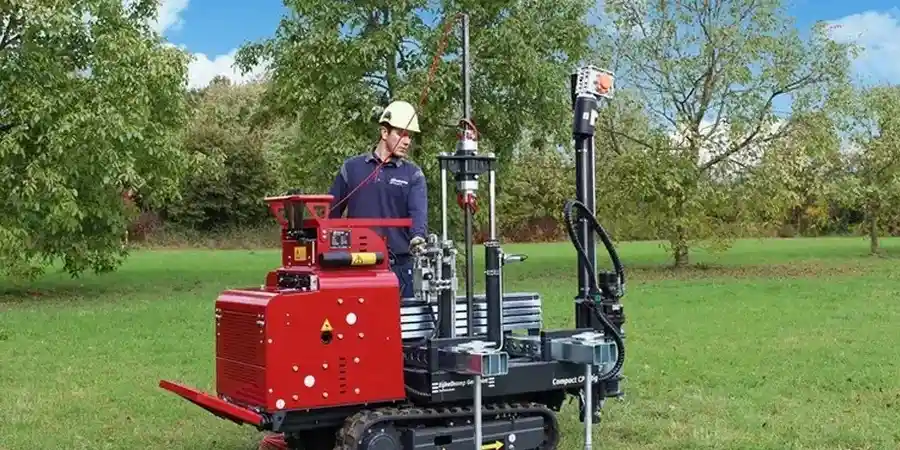
In the United States, geotechnical investigations must comply with standards set by ASTM International, notably ASTM D1586 for Standard Penetration Tests and ASTM D5778 for CPT (Cone Penetration Test) procedures. Local building codes in Overland Park, enforced by the city's Community Development Department, align with the International Building Code (IBC) and require site-specific geotechnical reports for most commercial and multi-family developments. These reports must address bearing capacity, lateral earth pressures, and seismic site class per ASCE 7 guidelines, even in this region of moderate seismicity.
Projects that typically mandate comprehensive investigation include mid-rise office buildings in the College Boulevard corridor, retail centers, public schools, and infrastructure improvements such as stormwater detention systems and roadway expansions. Residential subdivisions on previously undeveloped land also require evaluation to ensure stable foundations on Overland Park's variable soils. Specialized in-situ testing like CPT (Cone Penetration Test) offers continuous profiling of soil stratigraphy and can be particularly valuable in the soft alluvial deposits found near stream corridors, providing high-resolution data that complements traditional boring methods.
Available services
Common questions
What does a typical geotechnical investigation in Overland Park include?
A typical investigation includes site reconnaissance, drilling exploratory borings, soil sampling, and in-situ testing such as Standard Penetration Tests or Cone Penetration Tests. Laboratory analysis of soil samples determines classification, strength, and consolidation properties. The final report provides foundation recommendations, lateral earth pressures, and construction considerations specific to Overland Park's clay-rich and limestone-bearing subsurface conditions.
When is a geotechnical investigation required by local regulations?
Overland Park building codes, adopting IBC Chapter 18, require a geotechnical investigation for all structures except detached one- and two-family dwellings not in special hazard zones. Commercial, industrial, and multi-family projects must submit a soils report with permit applications. The city's Community Development Department reviews these for compliance with bearing capacity and slope stability requirements.
How do Overland Park's soil conditions affect foundation design?
Expansive clay soils prevalent in Overland Park can swell when wet and shrink during dry periods, imposing significant stresses on foundations. Investigations must identify these soils so engineers can specify reinforced slabs, pier-and-grade-beam systems, or moisture control measures. Limestone bedrock near the surface in some areas may require rock excavation analysis and can influence deep foundation choices.
What is the difference between a CPT and traditional drilling for site investigation?
A Cone Penetration Test pushes an instrumented cone into the ground, providing continuous data on tip resistance, sleeve friction, and pore pressure without removing soil samples. Traditional drilling retrieves disturbed and undisturbed samples for visual classification and lab testing. CPT is faster and offers high-resolution profiling, making it useful for stratigraphy in Overland Park's alluvial zones, while drilling remains essential for obtaining samples for direct testing.
Location and service area
We serve projects across Overland Park and surrounding areas.