Geotechnical laboratory testing forms the backbone of any successful construction or infrastructure project in Overland Park. This category encompasses the physical and mechanical analysis of soil and rock samples extracted from a site, transforming raw field data into the quantifiable engineering parameters required for safe and cost-effective design. Understanding the precise characteristics of the subsurface materials—from their strength and compressibility to their hydraulic conductivity—is not just a procedural step; it is a fundamental risk management tool. For the expansive clays and residual soils prevalent in Johnson County, laboratory testing moves beyond simple classification to predict how these soils will behave under load and changing moisture conditions over the life of a structure.
The local geology of Overland Park is dominated by Pennsylvanian-age bedrock, primarily consisting of alternating layers of limestone and shale, overlain by a mantle of residual soils and loess. These residual soils, formed from the in-situ weathering of the underlying bedrock, often contain a high percentage of fine-grained particles. This makes specific index property tests, such as a Atterberg limits analysis, critical for evaluating the soil's plasticity and potential for shrink-swell behavior. A significant portion of foundation distress in the region is directly linked to volume changes in these clay-rich soils, a risk that is precisely quantified through meticulous laboratory testing protocols.
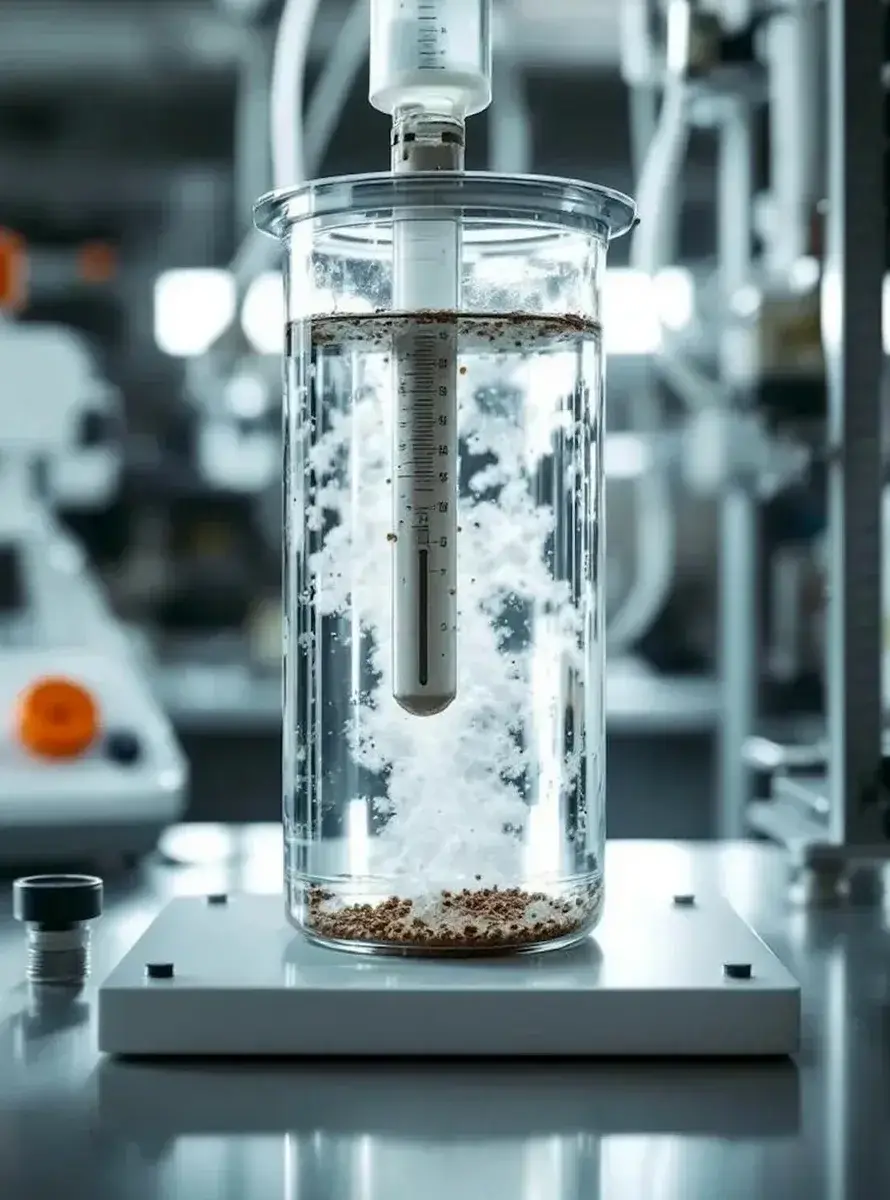
All laboratory procedures must strictly adhere to the standards set forth by ASTM International, which are universally referenced in local building codes and project specifications. Tests are conducted in accordance with methods like ASTM D422 for particle-size analysis and ASTM D4318 for liquid limit, plastic limit, and plasticity index. A comprehensive grain size analysis (sieve + hydrometer) is mandatory to determine the full distribution of particle sizes, from coarse sand down to microscopic clay colloids. This dual-method approach is essential in Overland Park to accurately classify the silty and clayey soils, as the hydrometer analysis captures the fine fraction that governs the soil's engineering behavior but would be missed by sieve analysis alone.
The types of projects requiring a robust laboratory testing program in Overland Park are diverse and far-reaching. Commercial developers rely on consolidation and direct shear tests to design foundations for office towers and retail centers on the often variable ground. Municipal infrastructure projects, including road widenings and stormwater detention basins, require proctor tests and permeability assessments to ensure compacted fill and drainage systems perform as designed. Even residential builders depend on laboratory data to comply with warranty requirements for foundation performance on expansive soils. The data generated in the lab directly informs the geotechnical engineer's recommendations, dictating everything from footing dimensions and slab-on-grade reinforcement to the depth of over-excavation required to remove problematic soils.
Common questions
What is the primary purpose of a geotechnical laboratory testing program?
The primary purpose is to accurately determine the physical, hydraulic, and mechanical properties of subsurface soils and rock. This data is essential for geotechnical engineers to design safe and economical foundations, assess slope stability, predict settlement, and evaluate the suitability of on-site materials for use as engineered fill, moving beyond visual classification to quantified engineering parameters.
Which ASTM standards govern common soil laboratory tests in Overland Park?
The most common standards include ASTM D422 for particle-size analysis, ASTM D4318 for Atterberg limits, ASTM D698 and D1557 for compaction characteristics, and ASTM D2435 for consolidation testing. Adherence to these specific ASTM procedures is mandatory for compliance with the Overland Park Municipal Code and generally accepted standard of care in geotechnical engineering.
How do laboratory test results help mitigate risks associated with expansive soils?
Tests like the Atterberg limits and particle-size analysis quantify the plasticity and clay content that drive shrink-swell behavior. High plasticity indices and a large percentage of clay-sized particles indicate a significant risk of volume change. This data allows an engineer to prescribe specific mitigation measures, such as moisture conditioning, over-excavation, or a structurally suspended floor system.
What types of soil samples are needed for a comprehensive laboratory analysis?
Both 'disturbed' and 'undisturbed' samples are typically required. Disturbed samples, collected in bags, are suitable for classification tests like grain size analysis and Atterberg limits. Undisturbed samples, often collected in thin-walled Shelby tubes, are essential for advanced strength and compressibility tests, such as unconfined compression, triaxial shear, and consolidation, which require the soil's in-situ structure to be preserved.
Location and service area
We serve projects across Overland Park and surrounding areas.