Excavation work in Overland Park represents a critical phase in the development of both commercial and infrastructure projects, requiring a deep understanding of local subsurface conditions and rigorous adherence to engineering standards. This category encompasses the full lifecycle of earth removal and ground support, from initial site investigation and geotechnical design through to construction-phase monitoring. In a city experiencing steady growth, proper excavation practices are essential to protect adjacent structures, maintain public safety, and ensure the long-term performance of foundations, utilities, and transportation corridors. technicians operating in this space must integrate advanced analysis techniques with practical construction knowledge to navigate the challenges posed by the region's complex geology.
The geology beneath Overland Park is characterized by alternating layers of overconsolidated glacial till, weathered shale, and limestone bedrock typical of the Kansas City metropolitan area. These formations often exhibit significant variability over short distances, with the presence of expansive clay seams and occasional groundwater perched within weathered rock zones. Such conditions demand specialized approaches like geotechnical design of deep excavations to manage lateral earth pressures and prevent basal heave. Additionally, the stiff clays can mask potential long-term settlement issues, making thorough pre-construction characterization indispensable for any project extending below the water table or into bedrock.
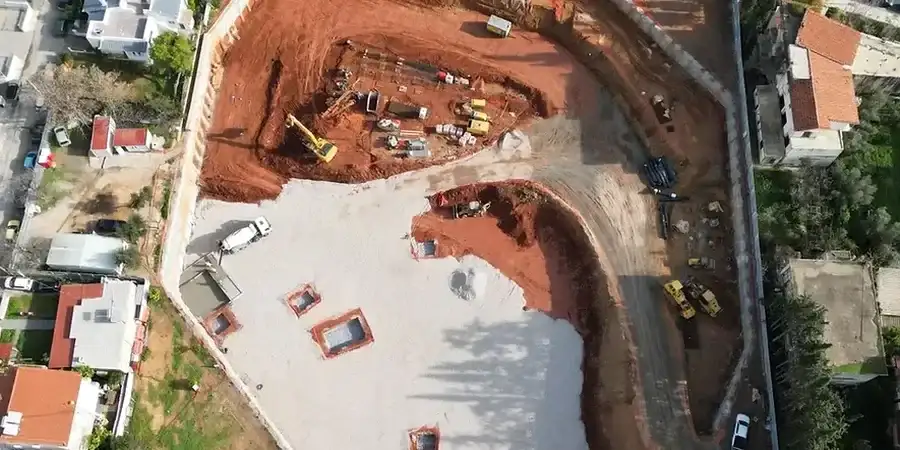
Regulatory compliance for excavations in Overland Park is governed primarily by the Occupational Safety and Health Administration (OSHA) Standard 29 CFR 1926 Subpart P, which mandates protective systems for trenches deeper than five feet. Local amendments and the International Building Code (IBC), as adopted by the City of Overland Park, further dictate requirements for shoring, underpinning, and protection of adjacent properties. A comprehensive geotechnical investigation, conforming to ASTM D420 and D2488 standards, is typically required to inform the classification of soil types and the selection of appropriate sloping, benching, or support systems. These regulations ensure that all earthwork minimizes risk to workers and the public.
The types of projects that necessitate expert excavation activities range from high-density residential and mixed-use developments in the downtown corridor to critical infrastructure upgrades along major thoroughfares. Deep basements, underground parking structures, and utility tunnels through soft ground frequently rely on geotechnical analysis for soft soil tunnels to predict ground behavior and optimize support installation. Municipal projects, such as stormwater detention systems and sanitary sewer interceptors, also demand precise excavation control to avoid damaging existing buried infrastructure. For all these applications, continuous geotechnical excavation monitoring provides real-time data on wall deflections, ground settlement, and vibration levels, enabling proactive adjustments to construction methods. By integrating design, analysis, and field observation, engineers deliver excavation solutions that are safe, efficient, and tailored to the unique subsurface environment of Overland Park.
Common questions
What are the primary geotechnical risks associated with excavations in Overland Park?
The main risks include slope instability in overconsolidated clays, basal heave in deep cuts through shale, and damage to adjacent structures from ground movement. The variable local geology, with expansive clay seams and perched groundwater, can create unexpected conditions. A thorough site investigation per ASTM standards is essential to identify these hazards before construction begins.
Which OSHA regulations apply specifically to trenching and excavation work in this region?
OSHA Standard 29 CFR 1926 Subpart P applies to all excavations, requiring protective systems such as sloping, shoring, or trench boxes for excavations deeper than five feet. A competent person must classify the soil type and inspect the excavation daily. Local enforcement follows federal guidelines, and the City of Overland Park may impose additional permitting requirements for deep excavations.
How does the local geology influence the choice of excavation support systems?
The interbedded glacial till, weathered shale, and limestone require adaptable support designs. Stiff clays may allow near-vertical cuts temporarily, but distress can develop rapidly upon exposure. Bedrock excavations often require rock dowels or shotcrete facing. The design must account for potential wedges sliding along relict joints or clay-filled seams, which is determined through detailed geotechnical analysis.
When is excavation monitoring legally or contractually required for a project?
Monitoring is typically mandated for excavations deeper than 20 feet, those adjacent to sensitive structures, or where ground movement could impact public rights-of-way. Building codes and project specifications often require crack surveys, inclinometer readings, and settlement point monitoring. This data verifies design assumptions and provides early warning, helping to avoid costly damage and legal disputes.
Location and service area
We serve projects across Overland Park and surrounding areas.