In-situ testing forms the backbone of geotechnical site investigation in Overland Park, providing engineers with direct measurements of soil and rock properties without disturbing the natural state of subsurface materials. This category encompasses a broad range of field testing methods that evaluate density, strength, permeability, and deformation characteristics right where they matter most—in the ground beneath proposed foundations, pavements, and earthworks. For a city experiencing steady commercial and residential growth across Johnson County, reliable in-situ data ensures that designs account for actual ground conditions rather than relying solely on laboratory tests that may not capture the full picture of soil behavior under field stresses.
The importance of in-situ testing in Overland Park cannot be overstated given the region's complex geology shaped by Pennsylvanian-age sedimentary rocks and residual soils derived from limestone and shale weathering. The area sits within the Osage Cuestas physiographic region, characterized by gently dipping rock layers that create alternating bands of harder limestone and softer shale. Overland Park's subsurface typically features silty clays and lean clays overlying weathered shale and limestone bedrock at varying depths. These conditions demand careful evaluation through methods like field density test (sand cone method) to verify compaction levels in fills and subgrades, as the expansive potential of local clay soils can significantly impact long-term structural performance if not properly identified and addressed during construction.
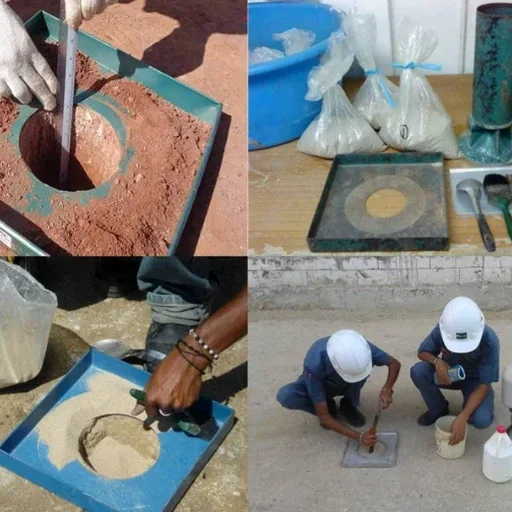
All in-situ testing conducted in Overland Park must comply with standards established by ASTM International and local building codes adopted by the City of Overland Park. Key specifications include ASTM D1556 for sand cone density testing, ASTM D1586 for standard penetration tests, and ASTM D6938 for nuclear gauge density measurements. The city enforces the International Building Code with local amendments, requiring geotechnical reports to include field test results that demonstrate compliance with bearing capacity and settlement criteria. Additionally, Johnson County stormwater regulations often necessitate infiltration testing for drainage design, making in-situ permeability assessments a routine requirement for commercial developments and subdivisions.
Projects across Overland Park routinely demand in-situ testing activities, from large-scale mixed-use developments in the Blue Valley area to infrastructure improvements along major corridors like Metcalf Avenue and College Boulevard. Roadway expansions, bridge foundations, retaining walls, and stormwater detention basins all require thorough field investigations to validate design assumptions. Residential subdivisions in areas with known expansive soil concerns benefit particularly from in-situ moisture and density profiling, while commercial building sites often require plate load tests or pressuremeter testing to refine foundation recommendations. The city's ongoing development in areas underlain by variable bedrock depths makes real-time field data indispensable for avoiding costly over-excavation or unexpected ground conditions during construction.
Available services
Common questions
What is in-situ testing and why is it preferred over laboratory testing alone?
In-situ testing measures soil and rock properties directly in the field without removing samples from their natural environment, preserving stress conditions, moisture content, and fabric that laboratory tests may disturb. While lab tests on undisturbed samples offer valuable data, in-situ methods like cone penetration testing and pressuremeter tests capture continuous profiles and large-scale behavior that discrete sampling cannot replicate, often yielding more representative design parameters for foundation engineering.
When are in-situ density tests required during construction in Overland Park?
In-situ density testing is mandated during earthwork and fill placement to verify compliance with project specifications and local building code requirements. The City of Overland Park typically requires density tests at specified intervals for structural fill beneath foundations, pavement subgrades, utility trench backfill, and retaining wall backfill. Test frequencies are usually defined by the geotechnical engineer of record and must demonstrate that compaction meets the minimum percentage of maximum dry density established through laboratory Proctor testing.
How do local soil conditions in Overland Park influence the choice of in-situ testing methods?
Overland Park's residual clays and weathered shale bedrock create specific challenges that guide method selection. Expansive clay layers require moisture and density profiling using nuclear gauges or sand cone tests to assess swelling potential. Variable bedrock depths necessitate standard penetration testing or cone penetration testing to map refusal elevations accurately. In areas with limestone pinnacles and solution features, cross-hole seismic testing or ground-penetrating radar may supplement traditional methods to detect voids and irregular rock surfaces.
What qualifications should an in-situ testing provider have for projects in Johnson County?
Testing providers should employ field technicians certified under recognized programs such as ACI or NICET and operate under the supervision of a licensed professional engineer familiar with Johnson County's geotechnical conditions. Equipment must be calibrated according to ASTM standards, and the firm should demonstrate knowledge with local regulatory requirements including City of Overland Park permitting processes. Proper documentation, including field logs, calibration records, and chain-of-custody forms, is essential for regulatory compliance and project record-keeping.
Location and service area
We serve projects across Overland Park and surrounding areas.